
Use Your Words
speaking kindly about my student's work, and my own
Intuitive Drawing is a weekly newsletter about creative work and being human. As always, take what you need and leave the rest.
My friends,
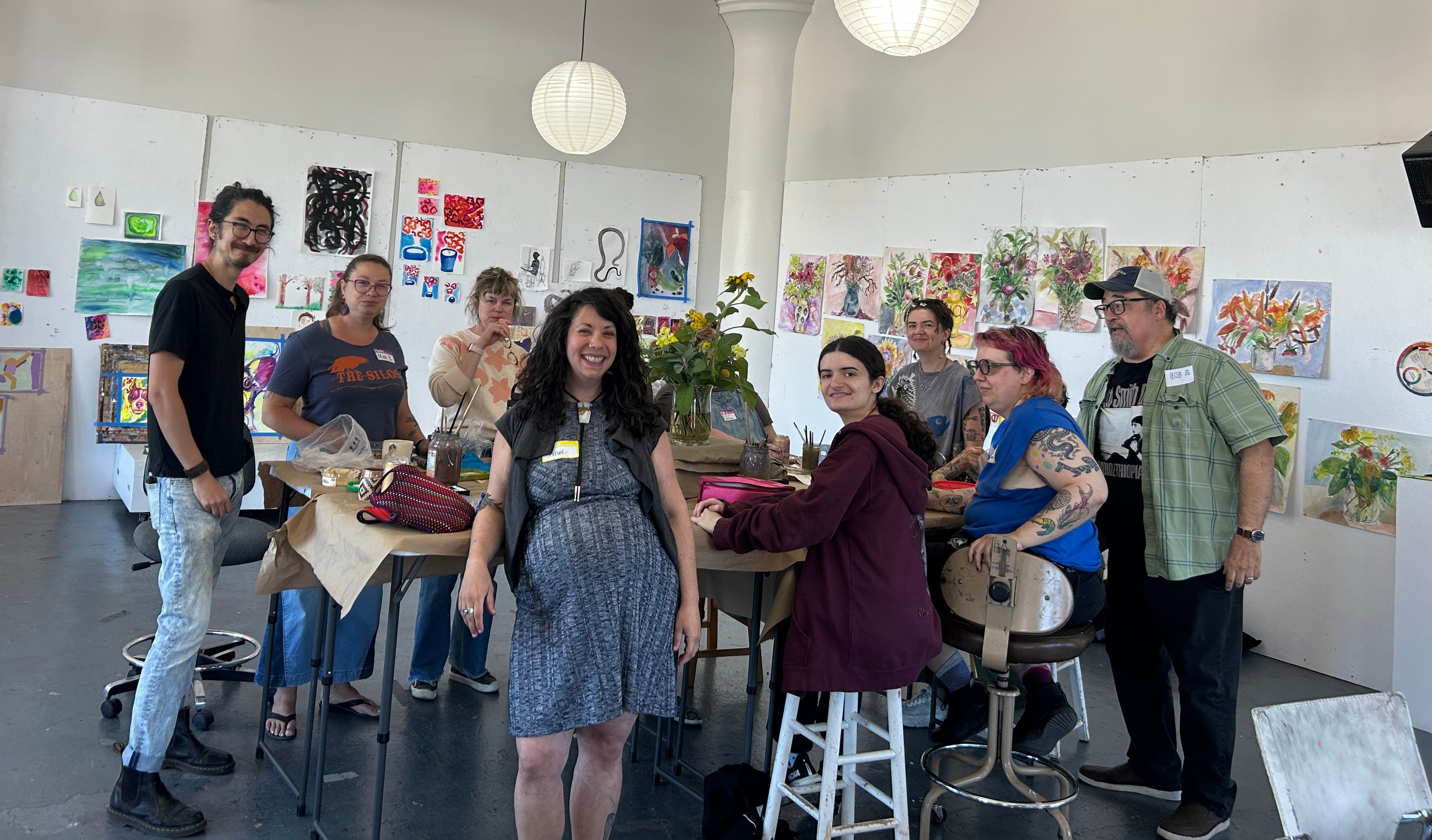
It is summer. I’ve taught one week of Adult Summer Art Camp, been on a camping trip with my friends, and now I’m traveling to Kentucky to see my parents.
Being in a creative community, using my voice, and the way I talk about art to help other people make art has been particularly gratifying lately. I tell my students that I want us to reflect on our art practice with a carrot, not a stick, meaning we are motivating ourselves by what we want, and not by beating ourselves up.


*I took these images from a newsletter about The Carrot And The Stick a while back, at the time I found them on Pinterest.
I think about my wording a lot, I often try to frame suggestions about art making as invitations, because one thing I’m trying to cultivate in everyone is an ability to trust themselves. I don’t want you to do something because I told you to, but if it sounds like an invitation you honestly want to partake in, please do!
I believe reflection is an important element of being in a class: the experience of putting your work on a wall and getting feedback from other artists isn’t readily available outside of class. I label this as reflection time, I don’t like to call it critique because that feels scary. I liked that my friend, Rin calls it show and tell.
So many adults come to art making emotionally battered and bruised, meaning they are scared to show, create, or finish their work because they are absolutely terrified it’s bad. The measurement of “bad” art is incredibly loose and vague and so everyone already assumes their work is bad. Many people default to realistic art being “good” because they can understand the technical skill involved. I will often make the joke that no one is going to abandon you for making bad art (another newsletter I’ve written) or that art is a truly low stakes practice, it isn’t open heart surgery, or rewiring a house, if something goes wrong, people usually don’t get hurt. I say these things over and over because I have felt terrified of making bad art before, I’ve had the same fear of abandonment flare when I don’t like a drawing as when I’ve been ghosted or when my friends are upset with me. The biological need for humans to interact with each other makes being abandoned by the village deeply anxiety inducing. Most people would just rather not make art than risk that feeling.
In adrienne maree brown’s book Pleasure Activism, amb shares how learning to love their own body started with loving the pinky fingernail. I ask artists to start with a pinky fingernail when saying things they like about their art. What is one tiny sliver or spark you can name? It’s easier with other people in the room who are going through the same process and telling you things they see or like in your art.
I think it builds frustration tolerance to like your own art, it helps you move forward and stay motivated. It feels good to make art from a place of joy instead of condemnation.
When artists are ready to progress beyond this is what I like about their work I ask what would make this the best piece of art it could be? The over-the-top part of myself doesn’t want to say problem solving, because your art isn’t a problem, but solution finding is a way to decide if it is working. We might ask:
Is it finished?
How is it reading? (what stories or emotions come up for us as a class)
How is your eye moving around the page?
Do you need more contrast?
Is there anything that is catching your eye and keeping you from seeing the piece as a whole?
Dear reader, I’ll leave us here this week, I’ve got a busy summer and so do you, but I hope you are getting rest, drinking water, seeing friends, and eating well.
Until next week, much love, Lettie Jane
Tidbits
End of Gemini Seasons means another playlist, it’s pretty poppy:
Happy Birthday To… (Artist of the Week)
I somehow neglected to notice that Jim Dine, Raymond Pettibone, and Tamara de Lempicka were all born on June 16th, and John Baldassari was born on June 17th! I love keeping a spreadsheet of artists with their birthdays for just this reason, it’s wild to me when multiple creative folks are born on the same day, years apart. I won’t go into sharing those artist’s images, and save that celebration for next year.
This week’s birthday goes to Philip Guston who was born June 27th, 1913 and died June 7th, 1980.
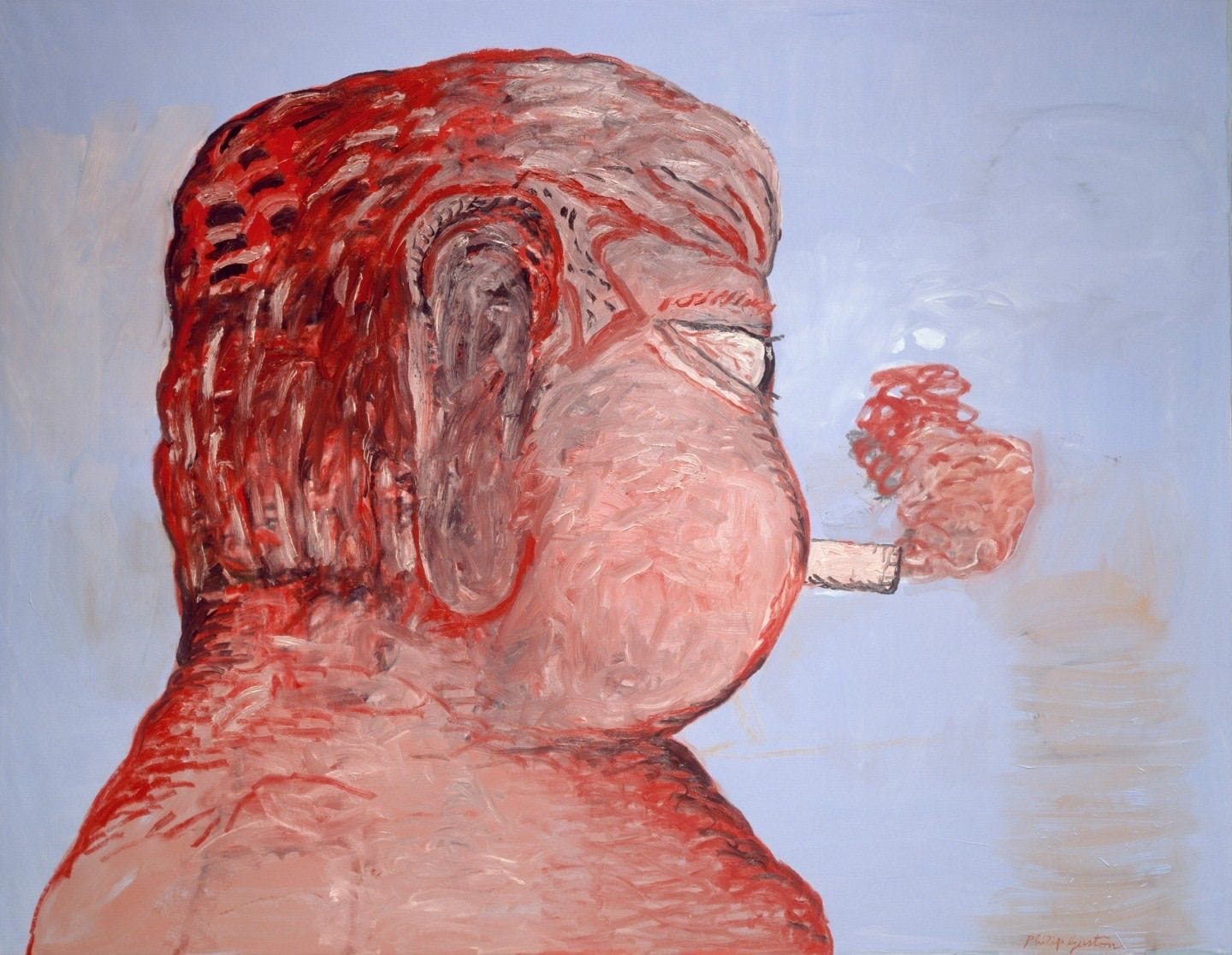
I loved Olivia Laing’s short essay about Philip Guston, The Body Snatchers. The following quotes are all exerps from that article:
They came like the past returning, Philip Guston’s ‘Klan’ paintings, which is to say through a channel that opened up in his memory, connecting the violent year of 1968 with the agitations of his youth. How could you keep painting abstractions, walls of exquisitely distressed paint, when there were bleeding bodies in the streets?
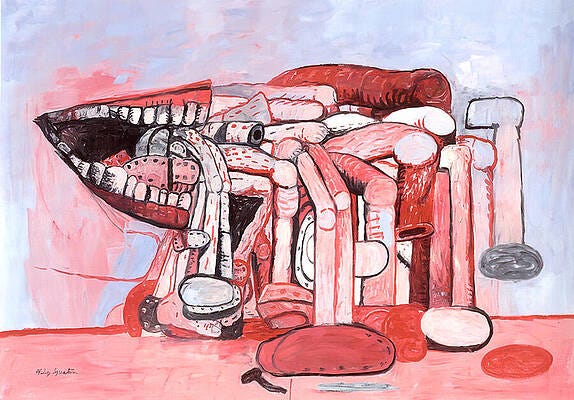
In the 1960s paintings, the Klansmen are cartoonish, worn-out: a tired, evil joke. ‘I felt, like everybody, disturbed about everything to such an extent that I didn’t want to exclude it from the studio, from what I did,’ he said in a lecture at Yale University in 1974. ‘I conceived of these figures as very pathetic, tattered, full of seams. I don’t know how to explain it. Something pathetic about brutality, and comic also.’ He gave them cigars to puff, cartoonish cars to drive…. Someone, some bozo, was underneath the hood, peering out at the world through slits in cloth. You have to bear witness, Guston kept saying – but he meant more than merely watching events unfold. He wanted to know what it felt like to be evil, to live with it on a daily basis. In his studio, in 1970, he scribbled notes on a yellow legal pad: ‘What do they do afterwards? Or before? Smoke, drink, sit around in their rooms (lightbulbs, furniture, wooden floor), patrol empty streets; dumb, melancholy, guilty, fearful, remorseful, reassuring one another?’
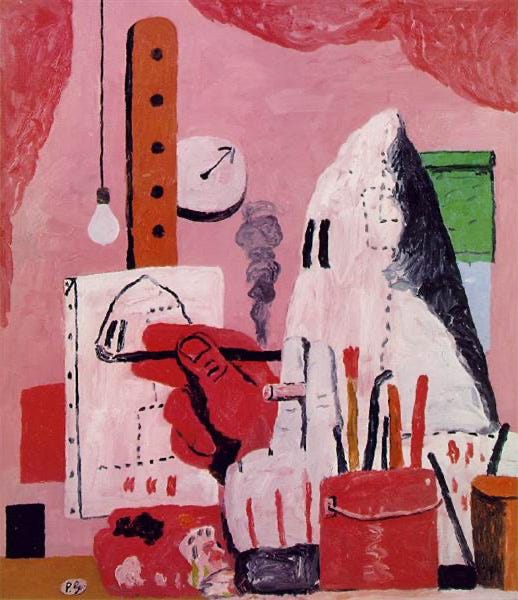
On 23 October 1968, Guston was in conversation with Morton Feldman at the New York Studio School. He’d been thinking a lot about the Holocaust, especially the concentration camp Treblinka. It worked, the mass killing, he told Feldman, because the Nazis deliberately induced numbness on both sides, in the victims and also the tormentors. And yet, a small group of prisoners managed to escape. ‘Imagine what a process it was to unnumb yourself, to see it totally and to bear witness,’ he said. ‘That’s the only reason to be an artist: to escape, to bear witness to this.’
Art Shows
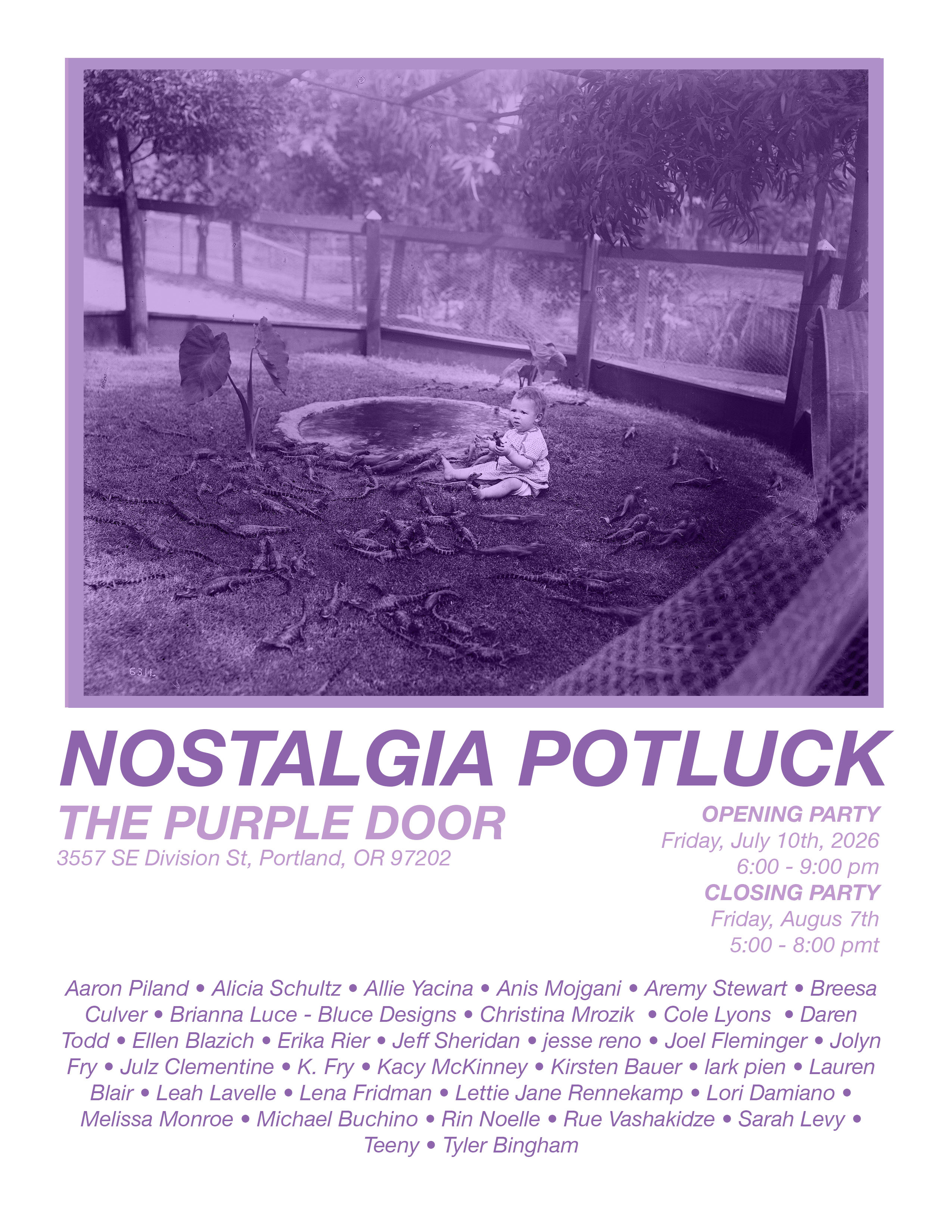
NOSTALGIA POTLUCK is a group show I’m co curating with Teeny Conway and I have a piece in, at The Purple Door, 3557 SE Division Street. Opening Party: Friday, July 10th, 6-9pm
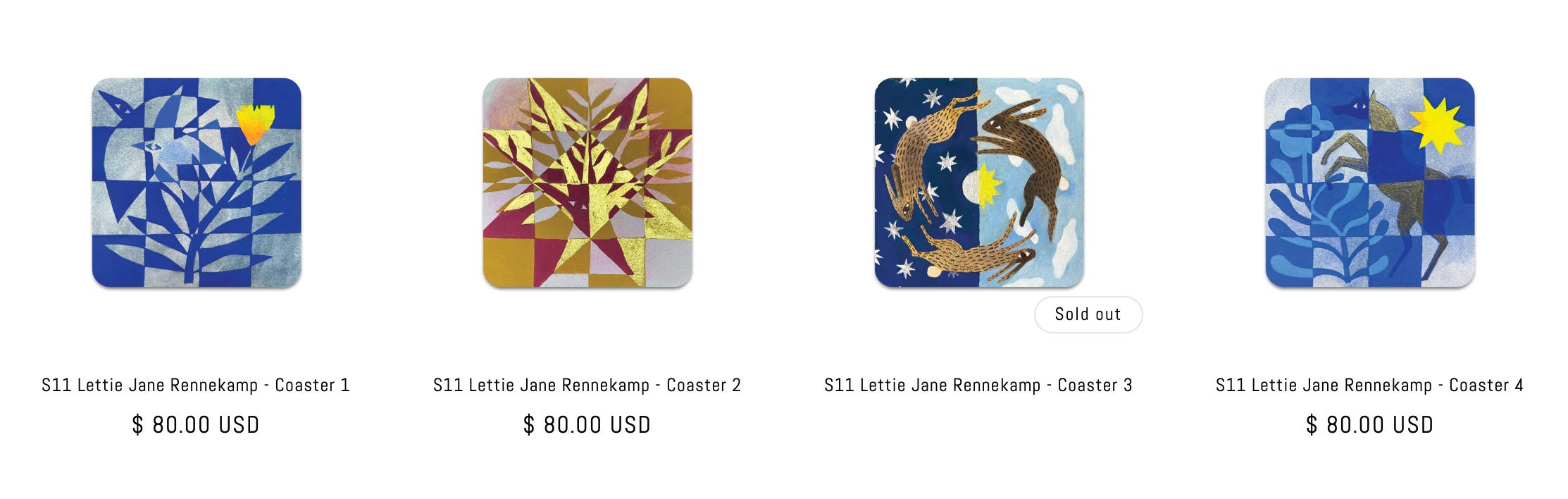
If you missed seeing my coaster in person at Nucleus’s Coaster show, you can still buy them online here. FYI that horse on the right side? It’s metallic watercolor, so it sparkles.
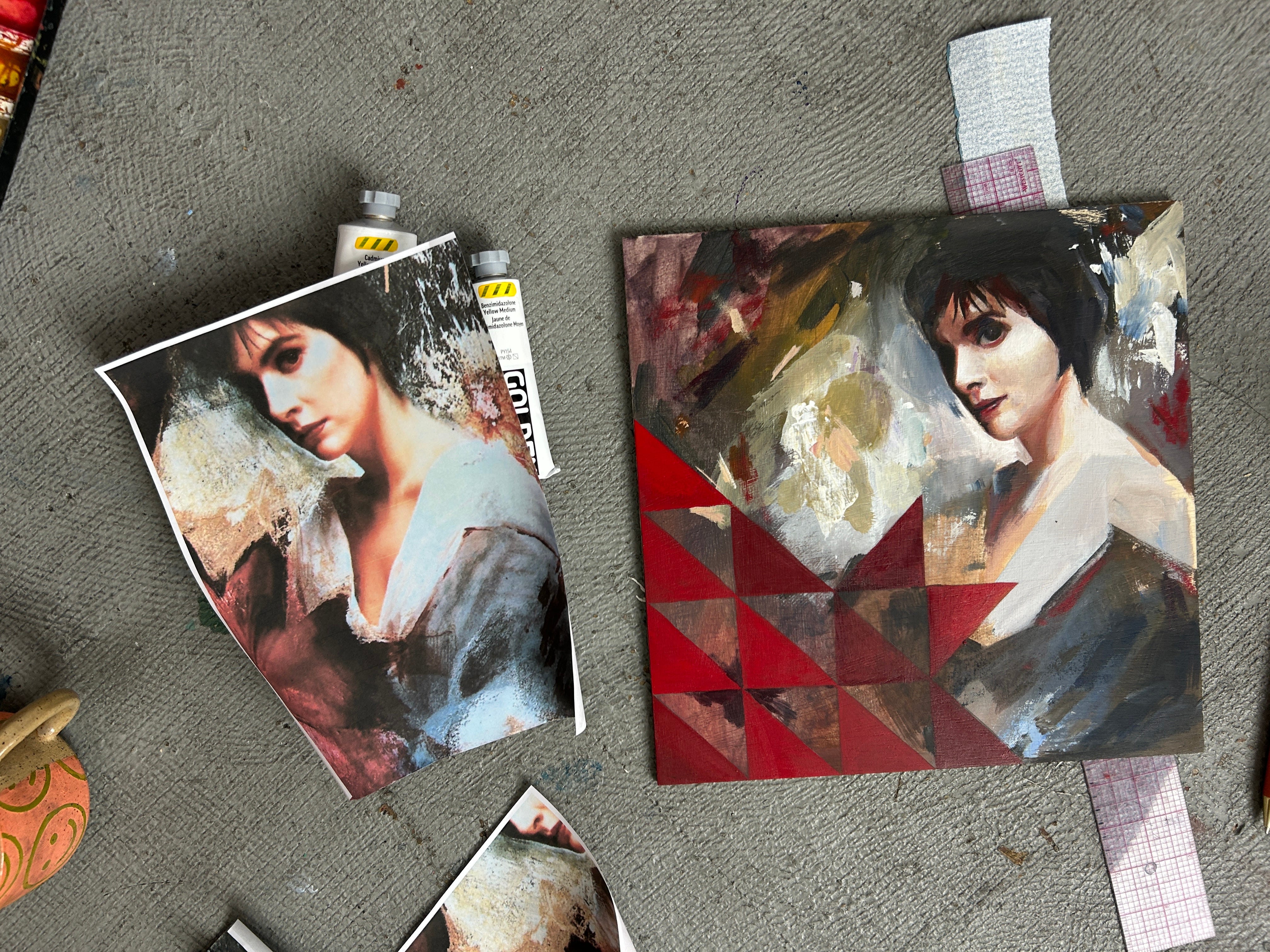
This Enya piece will be at the next LP Show at Albina Press, Saturday, September 26th
Summer Classes
Adult Summer Art Camp - Session 2 Monday - Friday, July 6th - July 10th
Adult Summer Art Camp - Session 3 Monday - Friday, August 3rd - August 7th
Intuitive Drawing (Saturday AM) Sept/Oct Saturdays, September 5th - October 3rd (5 weeks) 10:00am – 1:00pm
Deeper Drawing (Saturday afternoons) Sept-Oct Saturdays, September 5th - October 3rd (5 classes) 1:30pm – 4:30pm
Etc.
July book club: Art On My Mind by bell hooks
August book club: Walk Through Walls: A Memoir by Marina Abramović
September book club: Art Is Life by Jerry Saltz
LINE TIME is a tiny recorded class whenever you need it.
Ways to Bring My Work Into Your Home
The Bun Update is behind a paywall, so I can reward you kind folks who send money my way.
